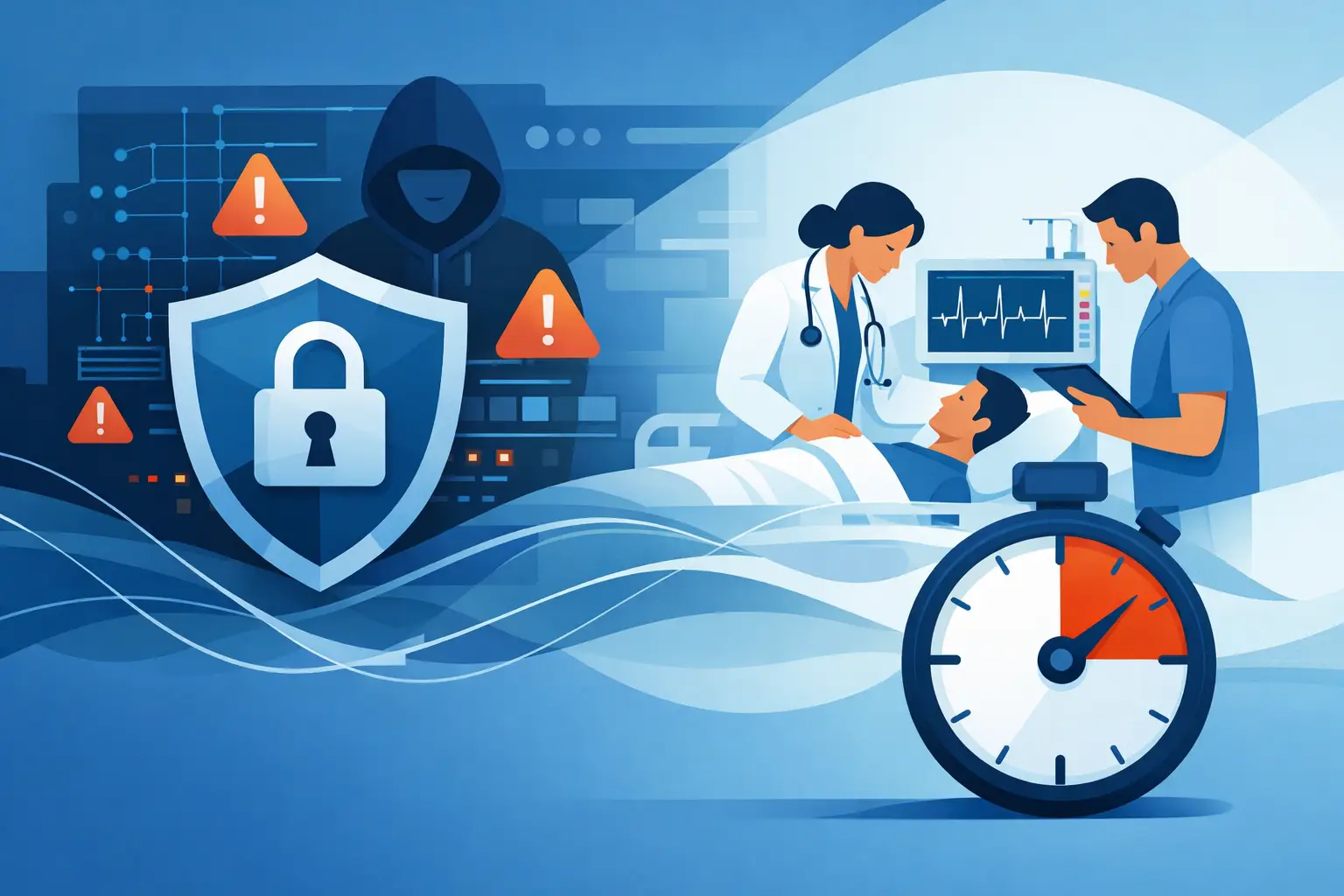
A suspicious login at 7:12 a.m. can become a patient privacy crisis before the first appointment is checked in. The difference is rarely a fancy security product. It is whether your team has a healthcare breach response plan, knows who can make decisions, and can reach a real person who understands your systems.
For a medical practice, clinic, healthcare nonprofit, or healthcare-adjacent organization, a breach is not just an IT outage. It can affect protected health information, patient trust, clinical operations, insurance obligations, and compliance deadlines. A calm, documented response protects far more than the network.
What healthcare breach response needs to accomplish
The first hours after a suspected breach are messy. Staff may be locked out of email. A vendor may be calling for access. Patients may be waiting. Someone may want to immediately delete a suspicious file or reboot a server.
That urge is understandable, but it can make the situation worse. A proper healthcare breach response has four jobs: contain the threat, preserve evidence, determine what information was affected, and restore safe operations. Those jobs overlap, but they should not be confused.
Containment means stopping further access without taking down more of the practice than necessary. Evidence preservation means keeping logs, affected devices, emails, screenshots, and timestamps intact so investigators can understand what happened. Scope analysis determines whether protected health information was actually accessed, acquired, altered, or exposed. Recovery means returning to normal operations from clean, verified systems.
The right order depends on the incident. If ransomware is spreading, fast isolation comes first. If an employee reports a suspicious email but no account activity, targeted investigation may be enough. There is no single button labeled breach response. That is why a plan matters.
The first hour: contain without destroying the facts
When a staff member reports a phishing email, an unusual password prompt, missing files, or a system acting strangely, treat it as credible until proven otherwise. Do not wait for certainty while an attacker continues moving through the environment.
Start by contacting the people responsible for IT and security. If you use an outside provider, this is the moment when a local team that answers the phone earns its keep. Your internal incident lead should also notify executive leadership and, where appropriate, legal counsel and your cyber insurance carrier. Many insurance policies require prompt notice and may specify which forensic firms or breach counsel you must use.
Technically, the immediate goal is to limit access. Disable suspected accounts, revoke active sessions, reset credentials where warranted, and isolate affected computers from the network. Isolation does not always mean powering a device off. Disconnecting it from the network while preserving its state can give investigators more useful evidence.
Avoid freelance fixes. Do not allow multiple employees to reset settings, delete emails, or communicate externally without direction. Keep a written incident log from the beginning: who noticed the issue, when it was reported, systems affected, actions taken, and decisions made. In a stressful event, that timeline becomes essential.
Confirm whether this is a reportable breach
Not every security incident is a reportable HIPAA breach. A lost laptop with full-disk encryption and no evidence of unauthorized access may be handled differently from an attacker downloading patient records through a compromised Microsoft 365 account.
Under the HIPAA Breach Notification Rule, organizations generally need to assess whether an impermissible use or disclosure of unsecured protected health information compromises the security or privacy of that information. The assessment commonly considers the nature and extent of the data involved, who received or used it, whether it was actually acquired or viewed, and how much the risk was mitigated.
That analysis should be documented and led with legal and compliance guidance. Do not let a well-meaning office manager make a reportability call based on a quick look at an inbox. Likewise, do not assume that a vendor handles the decision simply because the vendor hosts a system. Business associate agreements, contracts, and the actual facts of the incident all matter.
If notification is required, HIPAA generally requires notice without unreasonable delay and no later than 60 days after discovery for affected individuals. Breaches involving 500 or more individuals have additional reporting and public notice requirements. State privacy laws, payer contracts, licensing rules, and insurance obligations can create different or shorter deadlines. This is one area where guessing is expensive.
Restore care delivery safely, not quickly at any cost
A practice under pressure wants systems back immediately. That is reasonable. It is also how reinfection happens.
Before reconnecting a device or restoring data, identify the entry point and close it. Was it a stolen password without multifactor authentication? An unpatched firewall? A remote access tool nobody remembered was still enabled? A vendor account with excessive permissions? Restoring the same weaknesses simply gives the attacker another invitation.
Recovery should use known-good backups, not whatever copy happens to be closest. Confirm that backups are complete, protected from routine network access, and tested for restoration. If electronic health records, scheduling, imaging, phones, or file shares are affected, set recovery priorities based on patient care and operational impact. A small practice may need scheduling and clinical documentation first. A specialty group may need imaging access or a critical line-of-business application before anything else.
During the outage, use approved downtime procedures. Paper notes, temporary scheduling processes, and clear internal communication can keep care moving while systems are validated. The goal is not to pretend nothing happened. The goal is to provide safe, accountable service while the technology is brought back under control.
Communication can protect or damage trust
Silence creates its own problems. So does sending an early email that contains inaccurate facts. Assign one person or a small leadership group to approve staff, patient, vendor, insurer, and public communication.
Staff need practical direction first: which systems are safe to use, whether passwords must be changed, where to report suspicious activity, and what they should say if patients ask questions. They should not speculate, blame a coworker, or assure anyone that no data was affected before the investigation supports that statement.
Patient notification, if required, should be clear and specific. Explain what happened, what information may have been involved, what the organization has done, and what steps patients can take. Legal counsel should review notification language, but plain English still matters. Patients do not need a wall of compliance language. They need honest information and a useful next step.
Build the plan before the incident ticket arrives
A breach response plan should be short enough to use at 2 a.m. and detailed enough to prevent confusion. It should name the incident lead, IT contacts, executive decision-makers, legal counsel, cyber insurance contact, key software vendors, and backup provider. Keep that information available outside the network, not only in a shared drive that may be inaccessible during an attack.
Your plan should also define what triggers escalation. A suspicious email may be a help desk issue. A compromised administrator account, unexpected data transfer, disabled security tools, or encrypted files should trigger immediate incident procedures.
Test the plan with a tabletop exercise at least annually and after meaningful changes to your environment. Walk through a realistic scenario: a front-desk employee enters credentials into a fake Microsoft 365 page, the account sends phishing emails internally, and a vendor portal contains patient information. Who calls whom? Who disables the account? Who checks audit logs? Who informs the insurer? The exercise will expose gaps that a policy document never will.
404 Network Ninjas approaches this work the same way it approaches routine support: assess the environment, fix the risk that actually exists, document the work, and stay involved. That includes monitoring, patching, endpoint protection, backup testing, access controls, and a response process that does not begin with a distant ticket queue.
The prevention work that makes response less painful
Most breach response lessons point back to basic operational discipline. Multifactor authentication should protect email, remote access, administrative accounts, and any application that contains sensitive data. Former employees must be removed promptly. Shared accounts should be minimized. Security patches need an owner and a schedule, especially for firewalls, servers, and remote access tools.
Your backups deserve the same scrutiny as your security tools. Ask when they were last restored, how long a full recovery would take, and whether an attacker who compromises an administrator account could delete them. If nobody can answer those questions clearly, the organization is carrying more risk than it realizes.
No healthcare organization can guarantee it will never face a security incident. It can decide whether the response will be improvised or disciplined. The useful work starts before the breach: know your environment, rehearse the first call, and make sure someone capable will pick up when it matters.